

Custom Packaging Boxes: What Actually Matters Before You Order
2026-11-02
Custom packaging boxes are not a design exercise — they are a business decision that touches your budget, your brand, and your customer's first five seconds with your product. I've watched brands spend weeks on logo placement and then discover their boxes crush in transit or cost three times what they projected. The order of operations matters more than most people think.
What custom packaging boxes really are (and what they aren't)
Strip away the marketing language and custom packaging is simply a box built to your specifications: your dimensions, your material, your print, your finish. That's it. The confusion starts when suppliers bundle "custom" into vague tiers — a stock box with a sticker on it is not the same product as a die-cut mailer with a custom insert, even if both get called custom.
So what should you actually be specifying? Dimensions first, always. A box that's 5mm too tight will split at the seams; one that's 10mm too loose lets the product rattle and arrive looking used. Material comes second — corrugated for shipping, rigid chipboard for retail shelf presence, kraft for the eco-conscious crowd. Printing method third: digital for short runs, offset once you cross a few thousand units. And finish last, because foil stamping and soft-touch lamination are where budgets quietly die.
Here's the part people skip: the unboxing sequence. What does the customer see first when the lid comes off? If it's a crumpled tissue sheet and a loose card, all that print money was wasted. Design the inside, not just the outside.
Why getting this right pays for itself
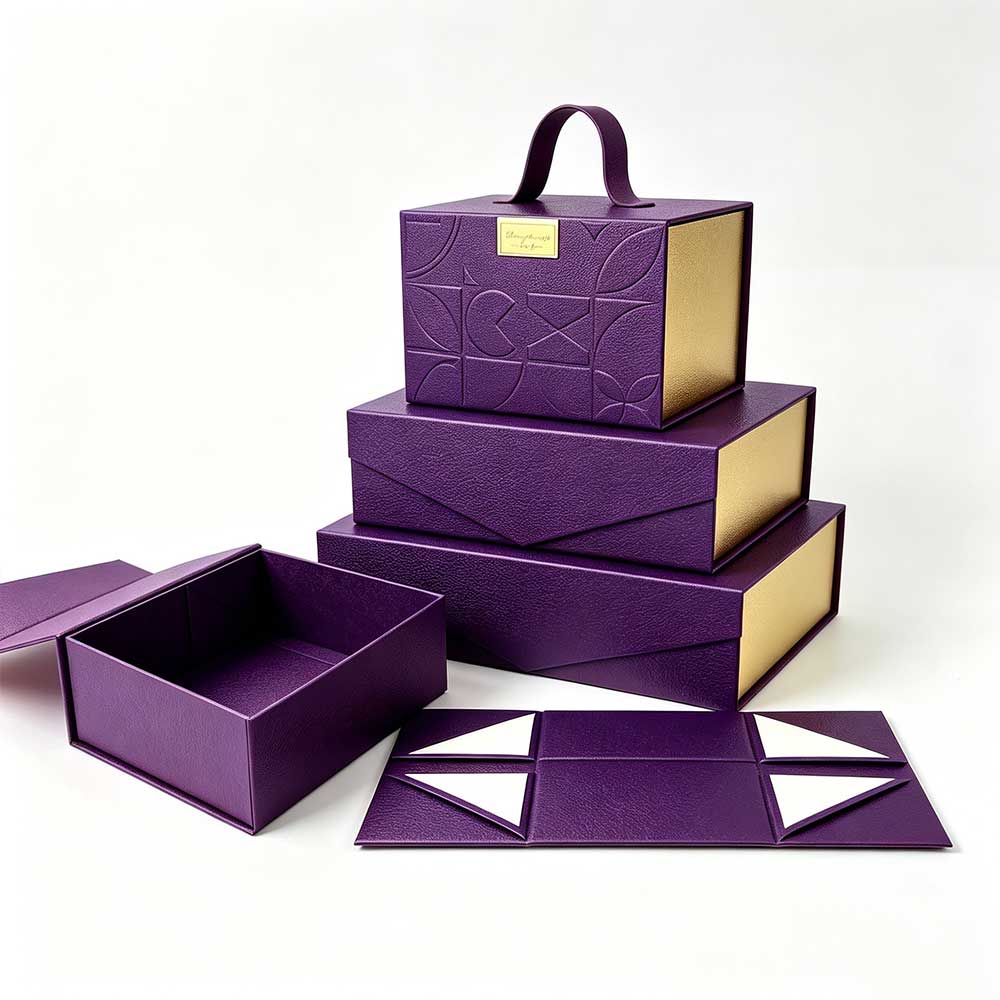
Packaging is one of the few marketing channels your customer physically holds. A well-made box signals that what's inside is worth protecting — and that perception carries into how they judge the product itself. I've seen the same candle sell noticeably better in a rigid box with a magnetic closure than in a plain kraft carton, at identical price points. The product didn't change. The expectation did.
There's a practical side too. Right-sized packaging cuts dimensional weight charges, which for e-commerce sellers can be the difference between a viable margin and a losing one. Carriers bill on volume, not just mass, so a box that's 20% too large is a recurring tax on every single order. And returns? Poor packaging is a quiet driver of damage claims that never show up in a "packaging" line item but absolutely show up in your P&L.
Then there's the sustainability question, which is no longer optional in most Western markets. If you're selling into the EU, expect customers and regulators alike to ask about recyclability and excess material. Buyers in Germany and the Netherlands in particular will notice a plastic window or a laminated box that can't go in paper recycling. Choose mono-material constructions where you can — it's cheaper to recycle and easier to explain on the box itself.
How to order without getting burned
Start with a physical sample. Not a digital mockup, not a 3D render — an actual box in your hands, filled with your actual product. Drop it from waist height. Shake it. Open it the way a rushed customer would. This one step catches most of the problems that would otherwise surface after you've paid for 5,000 units.
Ask your supplier directly about minimum order quantities and plate or die costs, because those are the numbers that make small runs expensive and large runs cheap. If you're testing a new SKU, digital printing on a stock size with a custom label is a perfectly respectable bridge — don't let anyone shame you into a full custom die for a product that hasn't proven itself yet.
Get timelines in writing, including the sample approval stage, which is where schedules usually slip. And if you're sourcing from overseas, build in buffer for customs and freight — a container delay in peak season can put your launch date at risk. Domestic suppliers cost more per unit but can often turn a reprint in two weeks instead of two months. For a first order, that flexibility is worth real money.
Finally, think about the second order before you place the first. Will this design still work when your product line doubles? Leave room in the structure — a slightly larger box with a fitted insert adapts better than one built to the millimeter for a single item.
None of this is glamorous. It's dimensions, samples, and freight math. But that's exactly the point: custom packaging boxes reward the people who treat them as an operational decision rather than a branding afterthought. Get the boring parts right, and the beautiful parts — the ones customers actually photograph — take care of themselves.
được đề xuất cho bạn
Hãy liên hệ với chúng tôi