


How Low Can Your Gift Box Order Go? A Buyer's Real-World Guide
2026-11-02
A friend of mine runs a small candle business out of her garage in Portland. Last spring she found a gorgeous rigid box supplier online, spent two weeks designing the artwork, and then discovered at checkout that the factory's minimum was 3,000 units. She needed 200. That single number killed the whole project — and it's a story I hear constantly from small brands trying to look bigger than their order volume.
So what actually determines the minimum order quantity (MOQ) for a gift packaging box manufacturer? The honest answer is that there's no universal number. I've seen factories quote MOQs as low as 50 pieces and others refuse anything under 5,000. The gap isn't arbitrary — it comes down to how the boxes are made, what materials are involved, and where the factory sits in the supply chain.
Why MOQs Vary So Wildly Between Manufacturers
Think about how a folding carton gets produced. The printing plate setup, the die-cutting mold, the color calibration — these are fixed costs that don't shrink whether you run 100 boxes or 100,000. A factory charging $800 for a custom die has to spread that cost across your order. At 100 units, that's $8 per box before you've even paid for paper. At 10,000 units, it's eight cents. That math explains almost everything about MOQ pricing.
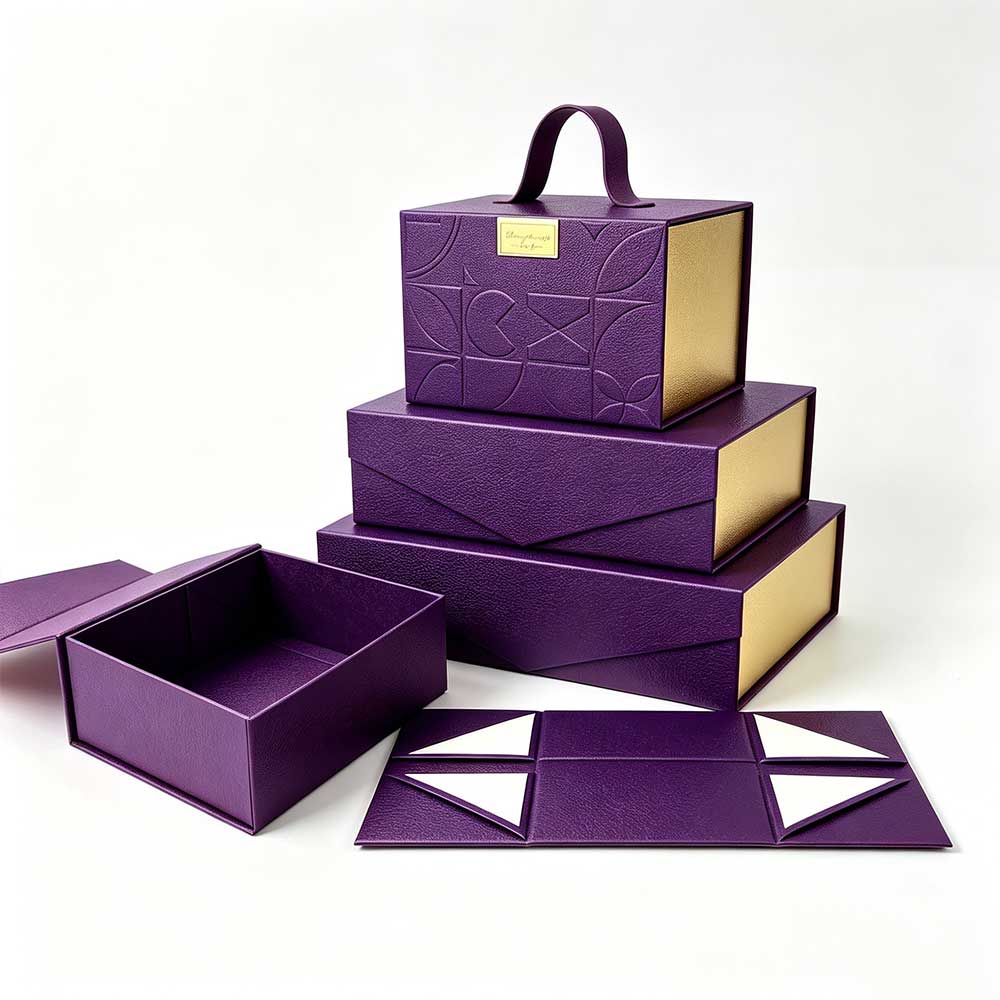
Rigid gift boxes — the kind with wrapped chipboard and magnetic closures — push minimums higher because they're assembled by hand. Hand assembly means labor hours per unit, and factories can't justify setting up a production line for a few hundred pieces. Most rigid box makers I've worked with set floors between 500 and 1,000 units. Corrugated mailers and simple folding cartons are more forgiving; digital printing has pushed some of those minimums down to 100 or even 50.
Material and Printing Method Matter More Than You'd Think
If you want foil stamping, embossing, or spot UV, expect the MOQ to climb. Each specialty finish requires its own tooling. Digital printing, on the other hand, has no plates at all, which is why short-run specialists can offer 50-piece minimums — you'll pay more per box, but you won't be stuck with a garage full of inventory. Offset printing usually needs at least 500 to 1,000 units to make economic sense.
Paper stock plays a role too. Standard gray board and art paper are stocked everywhere. Specialty papers, textured stocks, or imported materials often carry their own supplier minimums that get passed to you. I once waited six weeks on a Japanese textured paper because the mill wouldn't sell less than a full roll — the box maker had to absorb the rest or find another client to split it with.
How to Negotiate a Minimum That Fits Your Actual Needs
Here's where experience pays off. Most buyers treat the quoted MOQ as fixed law. It usually isn't. Factories quote high because they want predictable production runs, but many will flex for the right buyer — especially if you're ordering a standard size with standard finishes, or if you're willing to accept a stock color instead of a custom Pantone match.
Practical Levers You Can Pull
Ask about "stock plus print" options, where the factory uses an existing die and only customizes the artwork. That alone can cut minimums in half. Ask whether they'll run your job alongside another client's order using the same material — some will, and the MOQ drops accordingly. And don't overlook regional differences: manufacturers in Guangdong or Zhejiang often quote lower minimums than European factories because their setup costs are lower, though you'll need to factor in freight, duties, and longer lead times. For North American buyers, domestic short-run printers in states like Ohio or North Carolina are worth comparing against overseas quotes once you add landed cost.
One more thing — always ask what the MOQ is per size versus per order. Some factories will let you mix sizes to hit a combined minimum, which is a lifesaver if you sell gift sets in multiple dimensions.
My candle-making friend eventually found a digital printer in California with a 100-unit minimum and a per-unit price about 40% higher than the factory quote she'd originally chased. She ordered 150 boxes, sold out in three weeks, and reordered at 500. That's the pattern I'd recommend to almost any small brand: pay the short-run premium first, prove the product, then scale into the volume pricing. The minimum order isn't a wall — it's a negotiation, and knowing what drives it puts you in a far better position to push back.
được đề xuất cho bạn
Hãy liên hệ với chúng tôi