


Collapsible Gift Box Manufacturer: Seven Capability Checks
2026-11-06
Almost every supplier listing says "collapsible gift box manufacturer". Very few describe what they physically do, and that is the only thing that predicts whether your box will still fold cleanly on the fifth opening. A collapsible box passes through four processes that decide its quality, and a factory that subcontracts two of them is not really manufacturing the product — it is assembling it.
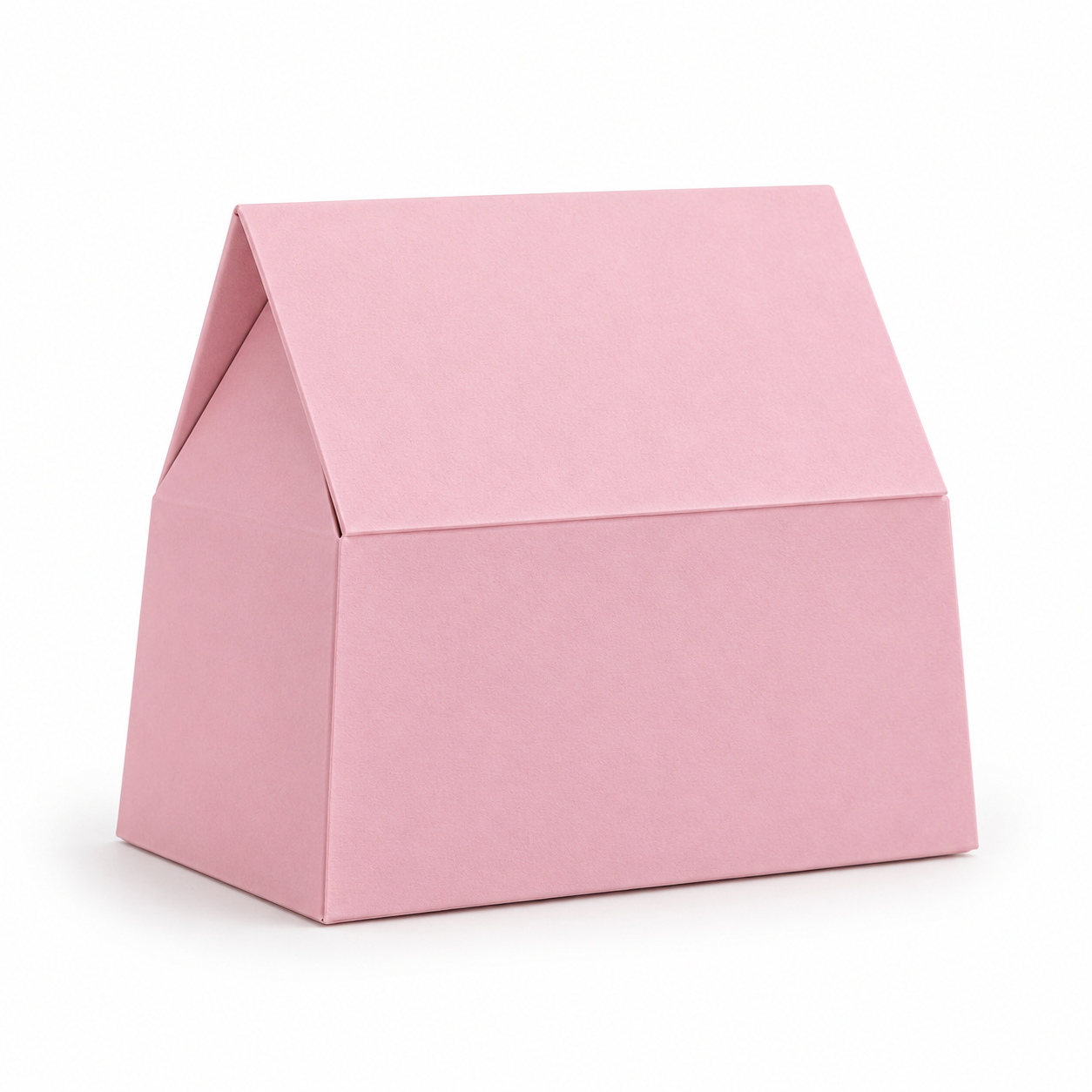
This page sets out the four processes, the questions that separate a real manufacturer from a reseller, and the one test you can run on a sample that tells you most of what you need to know.
The four processes that decide quality
1. Die cutting. The blank is cut and creased in one pass on a flatbed die cutter. Two things matter: registration between print and cut (visible as an off-centre border), and crease rule quality. A worn crease rule produces a fold that looks fine flat and tears when folded.
2. Greyboard cutting and mitring. The board core is cut to size, and for collapsible boxes the corners are cut back to create the hinge gap. The precision of that gap — typically 0.5–1.0 mm per corner — decides whether the box sits square or racks. This is the step most often outsourced, because it needs a separate board cutter.
3. Wrapping and corner forming. Printed wrap is glued over the board, and the corners are turned by hand or on a corner machine. On a collapsible box the wrap has to bridge an open hinge, which means the wrap tension is set differently from a rigid box: too tight and the hinge cannot close, too loose and the corner looks soft.
4. Assembly and insertion. Handle, magnets, ribbon, insert tray and any window film go in here. On a collapsible box this stage also includes the fold test — the box is folded and unfolded once before packing to confirm the creases are correct.
A factory that does all four in house can change a score depth or a corner gap without asking anyone. One that does not will tell you the specification cannot be adjusted, which is usually true and always a problem when the sample is wrong.
Die making: in house or not
Ask directly: "Do you make the die, and can I see the die line for my box before cutting?" A manufacturer with in-house die making will send a die line drawing within a day or two, with fold lines, bleed and glue tabs marked. A reseller forwards your email and waits.
In-house die making also changes the economics of a small first order, because a die that would cost a few hundred dollars as a one-off purchase can be absorbed into the sample stage. It changes the speed of an artwork revision even more: a tweaked fold is a same-week change rather than a new purchase order.
The test that tells you most
Fold and unfold a sample twenty times, then look at four places:
The corner. A hairline crack in the wrap at the fold means the score is too deep or the wrap is laminated. White crazing on a dark wrap is the same fault, more visible.
The crease itself. Run a thumb along it. A good crease feels like a rounded hinge; a bad one feels like a cut waiting to happen.
The base. Assemble the box, put a 2 kg weight in it, and lift by two opposite walls. If the base drops or the box racks, the base panel tolerance is wrong. This fault cannot be fixed by better printing.
The lid fit. Close it twenty times. It should stay flush. A lid that starts proud and gets looser is a tolerance problem that will show up as customer complaints, not as a failed inspection.
Twenty cycles is not a wear test. It is enough to expose a construction fault, which is what you are screening for.
Seven questions for a collapsible box manufacturer
| # | Question | What a good answer sounds like |
|---|---|---|
| 1 | Which of the four processes do you run in house? | A specific list, with the subcontracted one named rather than glossed |
| 2 | What greyboard weights do you hold in stock? | Named grades and thicknesses, not "any thickness you need" |
| 3 | Can you send a folded sample, not a flat one? | Yes, and it arrives folded |
| 4 | How do you control score depth? | Named crease rule height and a board-specific setting |
| 5 | What is your monthly capacity for this format? | A number in units, with a note on current load |
| 6 | Who does your inspection, and to what standard? | AQL level and sampling plan, or a named third party |
| 7 | What have you made in this format before? | Photos of comparable boxes, ideally with the fault they solved |
Question 5 is the one buyers skip and later regret. Capacity matters less than load: a factory with 100,000 units a month and 90% booked will quote a lead time it cannot hold. Asking "what is your current load on this line" gets a more useful answer than asking for capacity, and it is a fair question.
Capacity, load, and the date you actually get
Capacity and lead time are different questions, and confusing them is how buyers end up with a shipment three weeks late. Capacity is what a factory can do in a month. Load is what is already booked against it. A factory at 60% load will hold a 25-day promise; the same factory at 95% load will quote the same 25 days and miss it, because every job in front of yours is competing for the same assembly benches.
The question worth asking is not "what is your capacity" but "how many days of work are booked on this line, and where does my order sit". A supplier who can answer that is tracking their own floor. One who cannot is guessing on your behalf.
Two seasonal effects sit on top of that. Chinese New Year closes production for two to four weeks, and the four weeks before the shutdown are the most congested of the year as everyone tries to ship first. If your delivery date falls in January or February, add three weeks rather than hoping. The pre-Christmas peak in September and October has a similar effect on gift packaging specifically, because that is when retail programmes ship.
If a quoted lead time is under 20 days for a new custom box in peak season, ask what is being compressed. Sometimes the answer is "we hold your board in stock", which is fine. Sometimes it is "we have not checked the print schedule", which is not.
What "manufacturer" should mean on a quotation
Three items on a quote tell you whether you are dealing with the factory:
The die cost appears as a line item, or is explicitly included. A reseller often cannot itemise it because they do not own it.
The quote states the greyboard grade and the wrap material by name. "High quality material" is not a specification and cannot be inspected against.
The lead time is broken into sampling and production. A single number that covers both usually means the sampling stage is being managed by someone else.
None of this means a trading company is a bad choice — for a multi-item order across several factories, an agent earns their margin. It means you should know which one you have, because the price and the accountability are different.
Wrap, finishing, and what gets subcontracted
Collapsible boxes are judged on their surface, so the wrap capability matters as much as the board. Ask what wrap stocks are held: art paper in what weights, kraft, textured and specialty papers, and whether those are in stock or ordered per job. A factory holding wrap in stock can start your run next week; one ordering per job adds two to three weeks before the die is even mounted.
Finishing is where subcontracting hides most often. Hot foil stamping, spot UV, embossing and soft-touch lamination all need equipment that not every box factory owns, and a box that leaves the building for foiling comes back on someone else's schedule. That is not automatically a problem — plenty of good factories subcontract one finish — but it changes the risk profile of your delivery date, and it means a defect found after foiling is now a dispute between two suppliers rather than an internal fix.
The question that surfaces it: "Which finishes do you run in house, and which go out?" Then ask what happens when a foiled batch is rejected. A manufacturer who owns the process will re-run it. One who does not will often ask you to accept a slight variance, because the cost of the re-run sits with a third party.
For collapsible boxes specifically, lamination is worth asking about twice. A soft-touch laminate looks premium and is the single most common cause of corner crazing after repeated folding. If your box will be opened more than a handful of times, ask for the sample folded and unfolded twenty times before you approve the finish.
What Dongguan Minghan Packaging does in house
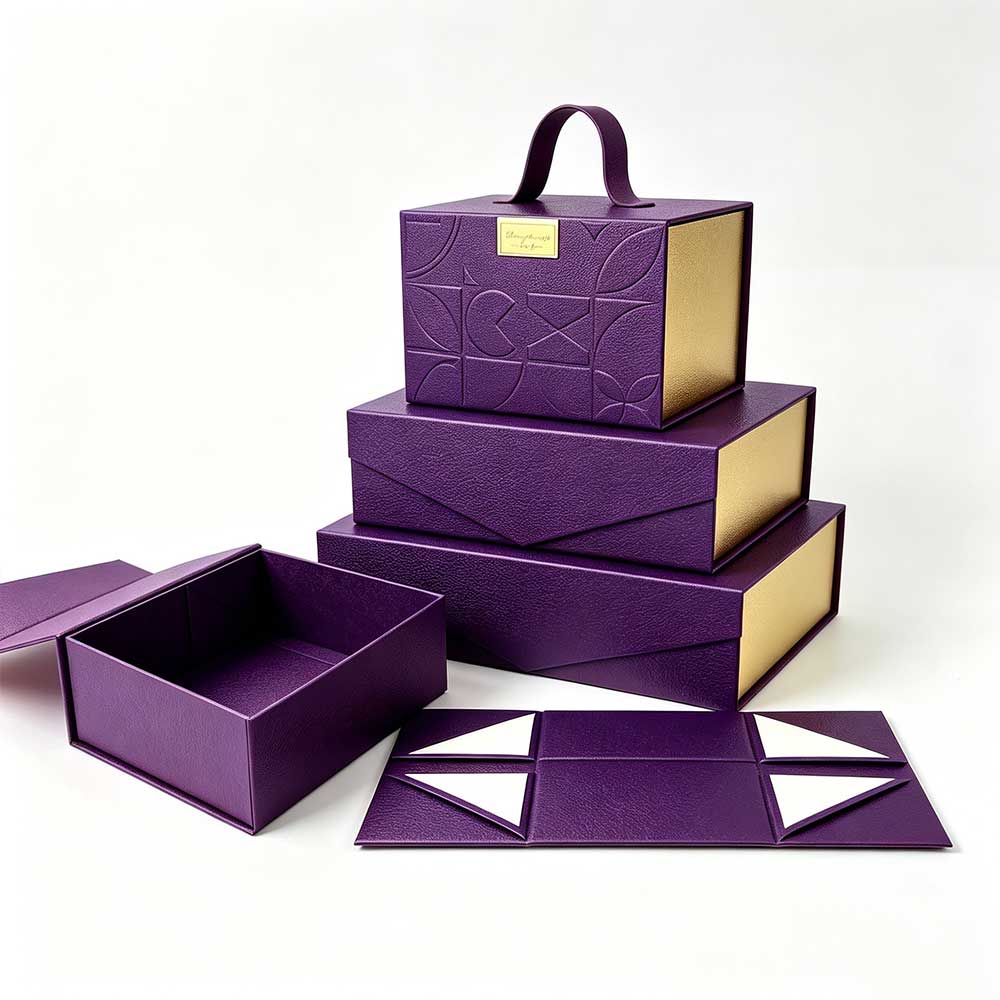
Dongguan Minghan Packaging Products Co., Ltd. is a gift box manufacturer in Dongguan, China, producing collapsible, foldable and rigid boxes for export brands. Die making, die cutting, greyboard mitring, wrap forming and hand assembly all run on our own floor, which is why we can send a folded sample in the post rather than a flat printed sheet.
Greyboard from 1.0 mm to 2.0 mm, art paper, kraft and textured wraps, with magnetic, ribbon, window, handle and drawer variants. Folded samples are standard on request; we would rather you found a weak hinge before the run than after it.
Ask for a folded sample and a quoted specification — or read how a collapsible box is constructed first.
Related reading
- Collapsible gift boxes: how they fold and what they cost
- Inside a gift box factory: how your order gets made
- How to vet a gift box supplier: 12 checks that matter
- Greyboard thickness for rigid boxes: a buyer's technical guide
- Buying foldable gift boxes wholesale: what volume changes
- Packaging buyer checklist: 27 questions before you pay
あなたへのおすすめ

お問い合わせください