


Integrated Solution for Foldable Tea Gift Boxes: Premium, Lightweight, and Mass-Producible
2026-09-12
I. The Core Contradiction and Design Logic
The core contradiction of foldable tea gift boxes lies in this: during transportation, they must be flat enough to minimize warehousing and logistics costs; at the point of presentation, they must be rigid enough to convey a premium positioning.
This contradiction defines the starting point of every design decision—structural selection, material specifications, and craft configuration must all answer two questions simultaneously: Can it fold flat? Can it stand tall?
II. Structural Selection: Comparing Three Mass-Producible Folding Options
Option A: Foldable Rigid Box (Greyboard + V-Groove) — The Premium Choice
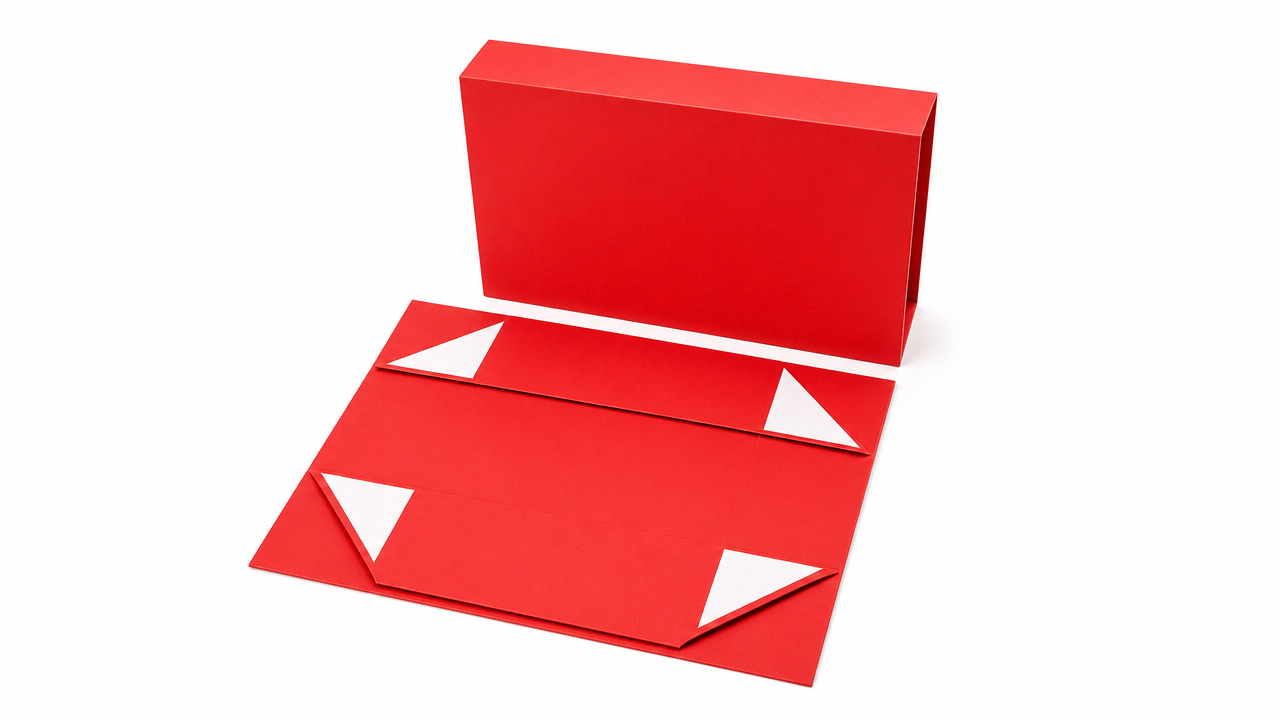
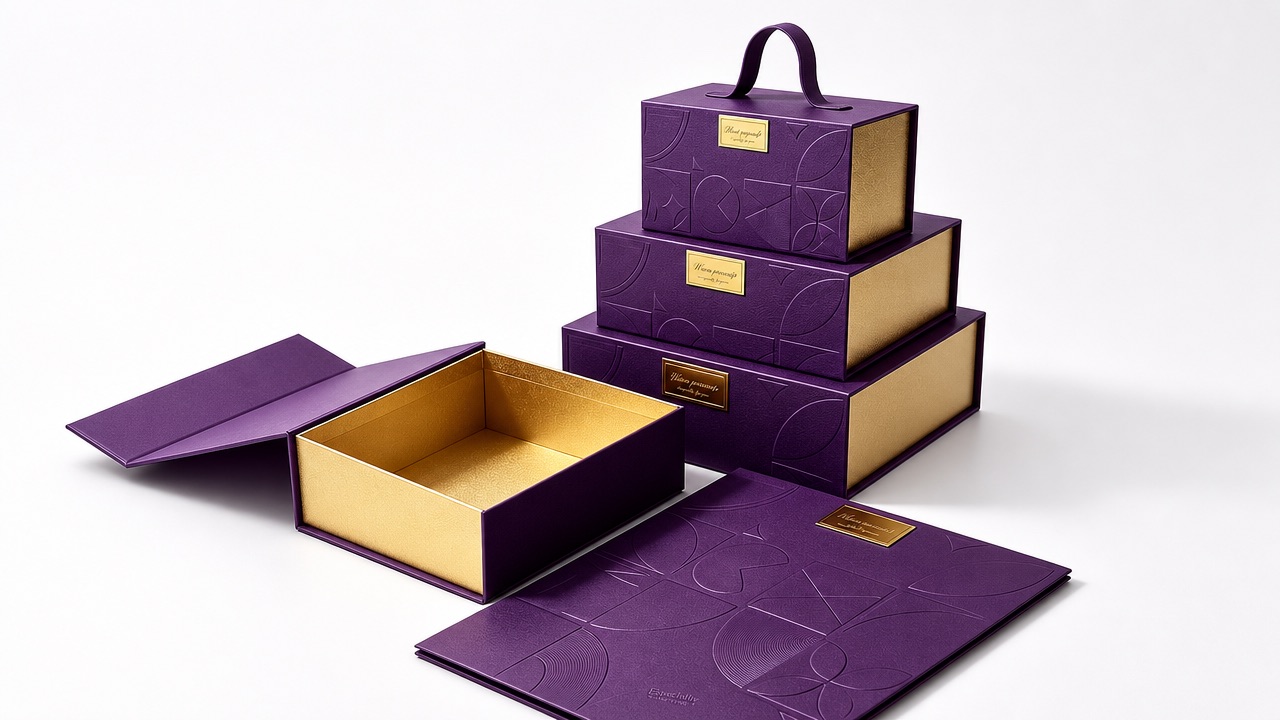
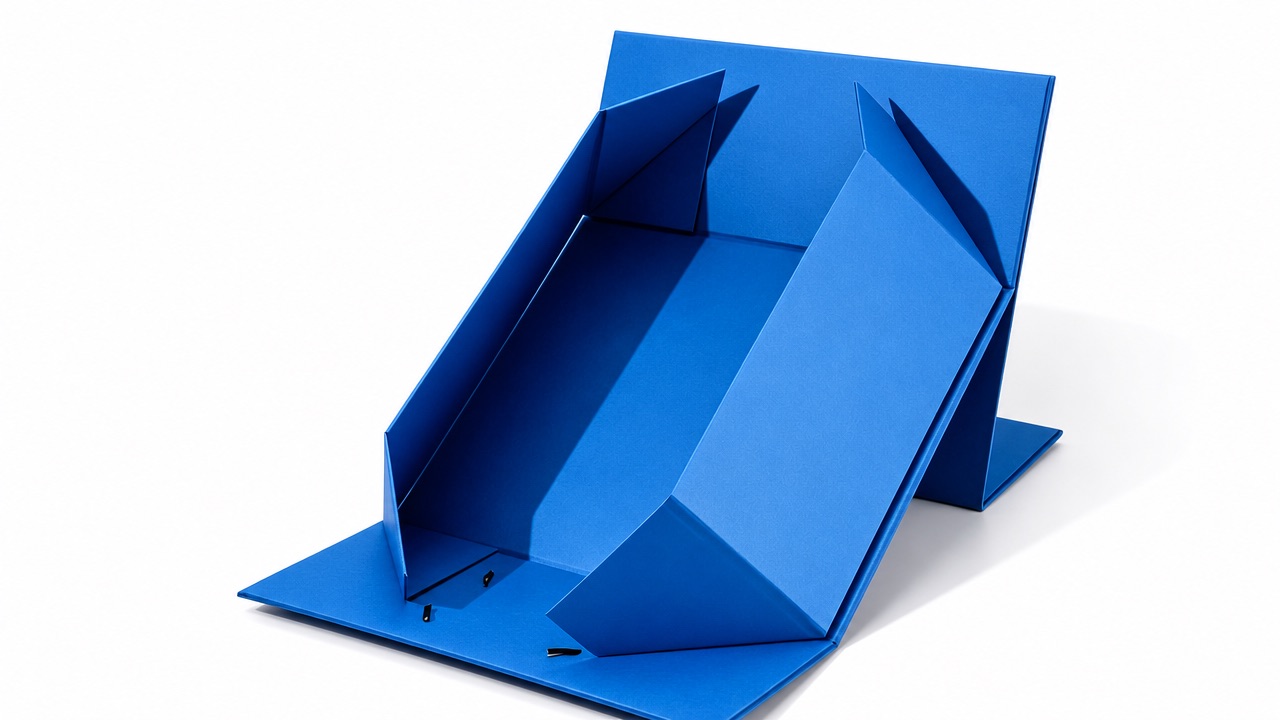
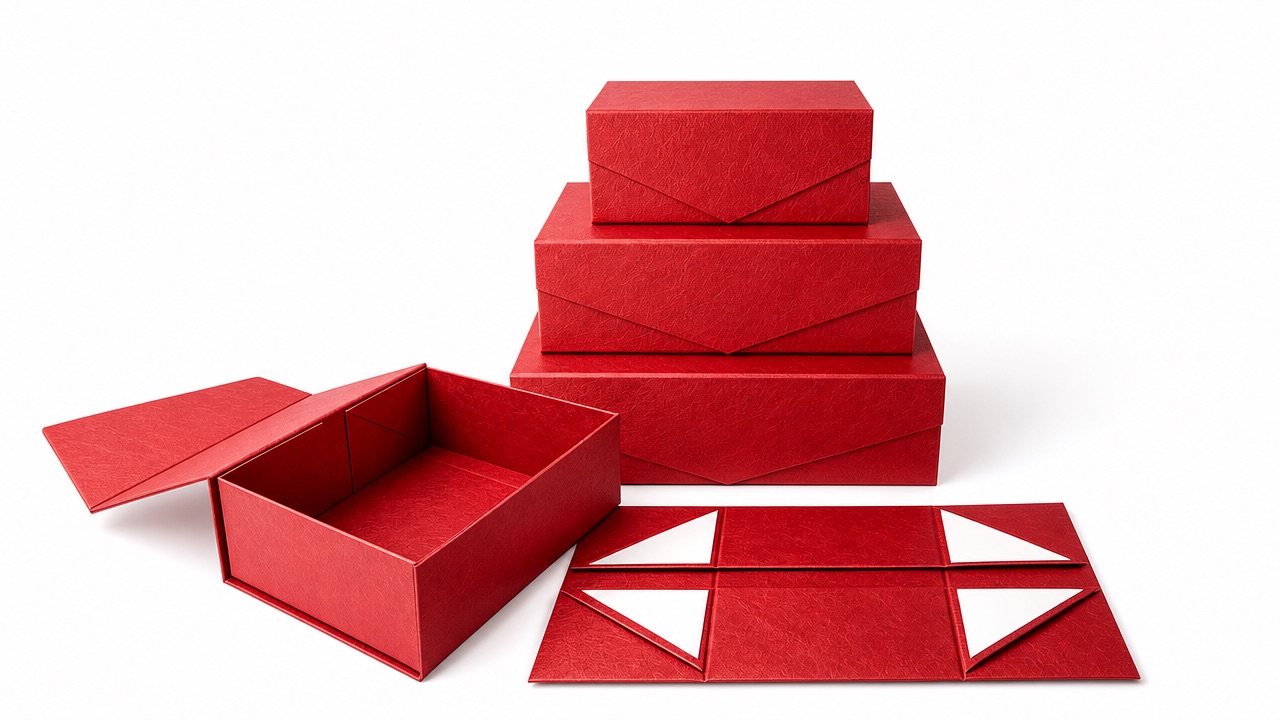
This is the most mature foldable structure for premium tea gift boxes. The core principle involves cutting V-shaped grooves into the inner side of greyboard, allowing the thick board to fold at specific positions. During transport, it remains flat; during assembly, built-in magnets or snap locks prop it up into a rigid box body. The surface can be wrapped with specialty paper, soft-touch paper, or art paper, delivering an exceptional tactile experience. MOQ is typically 1,000 units, with sampling taking 5–10 days.
Option B: Corrugated Fold-Over Box with Integrated Handle — The Lightweight Mass-Production Choice
Made from corrugated paper with integrated fold-over construction, the opening features a tuck-in design. Corrugated paper offers sufficient load-bearing capacity for tea tins or tea bags while weighing significantly less than rigid greyboard boxes. Die-cut windows can be integrated for product display, and the built-in handle eliminates the need for an external bag. MOQ is 1,000 units, with a lead time of approximately 2–3 weeks.
Option C: All-Paper Folding Hexahedral Box — Ultimate Lightweight
Die-cut from a single sheet of paper, this box folds into a six-faced rectangular structure, lying flat as a cross shape when unfolded. All locking is achieved through the paper's own L-shaped extensions and tabs—no glue required. The structure is ingenious, transports completely flat, and suits small-batch premium tea or tea bag gift boxes.
Selection Guide: For premium tactile quality with adequate budget, choose Option A. For lightweight efficiency, mass-production speed, and cost control, Option B is more practical. Option C works well as a differentiation highlight.
III. Materials and Craftsmanship: Engineering Parameters for Premium Feel
The premium feel of a foldable gift box cannot rely on design renderings alone—it must be grounded in specific parameters.
Surface Paper: 350g/m² red-core cardstock offers approximately 22% higher compressive strength than standard 300g white cardstock, and its edges resist cracking after folding. Specialty art paper requires surface sizing treatment to raise the burst index from 2.0 kPa·m²/g to above 3.5, ensuring it maintains appearance during transport.
Tactile Finish: Matte soft-touch film is now the standard surface treatment for premium gift boxes, with surface roughness Ra controlled at 0.8–1.2μm, providing a delicate skin-like feel and fingerprint resistance. When budget is limited, micro-embossed hot stamping (depth ≤ 0.08mm) can be applied only to the LOGO area, while the rest uses flat stamping plus soft-touch film. The overall cost increases by only about 25%, yet the tactile memory point of the main visual is significantly enhanced.
Inner Lining: Tea tins require secure, shock-absorbing fixation. Corrugated foldable inserts, optimized through AI cutting-path calculation, achieve a material utilization rate of 92% at approximately ¥0.3 per set. EVA flocked inserts cost about ¥0.8 but offer superior tactile quality. If the contents are tea bags rather than tins, the separate insert can be omitted, and divider sheets can be designed directly into the box.
IV. Moisture Barrier and Freshness Preservation: The Baseline Requirement for Tea Packaging
The "folding" nature of these boxes means seams and creases may present minor air-permeability risks, which must be compensated for through inner packaging.
Inner Pouch Barrier Layer: The inner pouch directly contacting tea should use PET/AL/PE or silicon oxide (SiOx) composite film. Aluminum foil structures can achieve a water vapor transmission rate (WVTR) below 0.1 g/m²·day and an oxygen transmission rate (OTR) below 0.1 cm³/m²·day·atm. Compared with traditional paper boxes, multi-layer barrier solutions extend the tea freshness period by approximately 35%.
Outer Box Moisture Protection: Matte film lamination on the surface paper serves not only tactile purposes but also as a moisture barrier. The inner liner board can use 1200–2000g grey cardstock, whose density and tightness provide inherent moisture resistance.
V. Mass Production Delivery: Timeline from Sampling to Shipping
The core of mass production for foldable gift boxes lies in die-cutting precision and gluing efficiency.
Die-Cutting Tolerance: For premium foldable boxes, die-cutting tolerance should be controlled within ±0.2mm, and V-groove depth must precisely match greyboard thickness; otherwise, box corners may crack or become loose after folding. The lid-and-base structure offers approximately 30% higher compressive strength than drawer-style boxes and is more compatible with high-speed gluing machines (up to 120 units/minute), providing a clear mass-production efficiency advantage.
Standard Timeline: Digital proofing takes 2–5 working days, print proofing 5–10 working days, and mass production 10–30 working days. It is advisable to confirm before ordering whether the supplier provides a die-cut drawing confirmation step, to avoid excessive die-cutting waste that drives up costs.
MOQ Reference: Foldable rigid boxes typically recommend a minimum order of 1,000 units; corrugated fold-over boxes likewise start at 1,000 units. Some suppliers with digital flexible manufacturing capabilities can now support lower minimum order quantities.
VI. Two Actionable Configuration Packages
Premium Business Tea Gift Configuration: Foldable rigid box (greyboard V-groove) + 350g red-core cardstock wrapped with soft-touch paper + partial micro-embossed hot-stamped LOGO + EVA flocked insert + aluminum foil composite inner pouch. The final presentation matches the quality of a traditional lid-and-base rigid box, while transport and warehousing costs are significantly reduced. MOQ 1,000 units, delivery in approximately 20 days.
Lightweight Volume-Oriented Tea Gift Configuration: Corrugated fold-over box with integrated handle + die-cut window display + corrugated foldable insert + SiOx high-barrier inner pouch. Costs are controllable, lead times are stable, and the integrated handle design eliminates the need for external bag procurement.
Conclusion
The value of foldable tea gift boxes lies not in the "folding" itself, but in using engineering methods to redistribute costs—transferring savings from logistics and warehousing into material tactile quality and brand experience. This is the underlying logic that allows premium quality, lightweight design, and mass production to coexist.
Get in touch with us